

By Adrian Beecher | SkyBoat.org
PASADENA, Calif. — What began as a measured feeling-out process turned into a statement win on college football’s most historic stage.
After a scoreless opening quarter, the Indiana Hoosiers exploded for 38 unanswered points and overwhelmed the Alabama Crimson Tide 38–3 in the Rose Bowl on Wednesday afternoon, punching their ticket to the College Football Playoff semifinals.
Indiana advances to face No. 5 Oregon in a Big Ten rematch at the Chick-fil-A Peach Bowl on Jan. 9.
Alabama won the opening toss and elected to defer, handing Indiana the first possession. The Hoosiers’ opening drive stalled quickly, ending in a three-and-out that included a sack of quarterback Fernando Mendoza. Alabama showed brief promise on its first series, but the Tide failed to convert a third-and-long near midfield and were forced to punt.
That punt, however, pinned Indiana deep at its own 3-yard line.
Mendoza calmly guided the Hoosiers out of danger, converting two first downs before uncorking a 30-yard strike to Charlie Becker that flipped field position and pushed Indiana across midfield. Three plays later, Indiana reached the red zone but stalled again, settling for a 31-yard field goal from Nicholas Radicic to open the scoring with 1:07 left in the first quarter.
Alabama’s response proved costly.
Facing fourth-and-1 near its own 34-yard line, the Tide twice lined up to go for it after a sequence of timeouts from both sidelines. Indiana held firm, stopping Alabama short and setting up prime field position.
Four plays later, Mendoza found Becker crossing the middle of the end zone for a 21-yard touchdown, extending Indiana’s lead to 10–0 with 10:49 remaining in the second quarter.
The Hoosiers were just getting started.
After a brief exchange of punts, Alabama mounted its best drive of the half, moving across midfield behind Ty Simpson. But on third-and-7, Simpson was stripped by D’Angelo Ponds as he tried to scramble for the marker. Indiana recovered the fumble with 3:09 left in the half, and the momentum never returned to Alabama’s side.
Mendoza capitalized immediately. He scrambled for a key first down on third-and-3 near midfield, then leaned on Roman Hemby to grind the ball inside the Alabama 35. With time winding down, Mendoza delivered again, connecting with Omar Cooper Jr. for a touchdown just before halftime to send Indiana into the locker room ahead 17–0.
The second half offered no relief for the Tide.
Indiana opened the third quarter with a methodical, 10-play, 79-yard drive that chewed more than five minutes off the clock and ended with a perfectly placed 24-yard touchdown pass from Mendoza to Elijah Sarratt in the back corner of the end zone. The score pushed the lead to 24–0 and effectively broke the game open.
Simpson did not return on Alabama’s next possession due to an apparent injury. Backup Austin Mack entered at quarterback and led the Tide to their only points of the afternoon, a 28-yard field goal.
Any hope of a comeback was quickly extinguished.
On Indiana’s ensuing possession, Kaelon Black burst through the Alabama defense for a 25-yard touchdown run, making it 31–3 early in the fourth quarter. Roman Hemby added the final blow with an 18-yard scoring run, capping a dominant performance on both sides of the ball.
Mendoza finished 14 of 16 for 192 yards and three touchdowns, earning Rose Bowl MVP honors. Indiana rushed for 215 yards on 50 carries, controlled the clock for more than 34 minutes, and limited Alabama to just 193 total yards.
“They execute at a high level,” Alabama head coach Kalen DeBoer said. “Everyone feeds off each other on both sides of the ball. It’s not just one thing.”
Indiana’s defense recorded three sacks, six tackles for loss, and forced the pivotal second-quarter turnover that shifted the game’s trajectory. Alabama managed just 23 rushing yards on 17 attempts and converted only three of 11 third downs.
Black led the Hoosiers with 99 rushing yards, while Hemby added 89. Becker, Cooper Jr., and Sarratt each found the end zone, underscoring Indiana’s balanced attack.
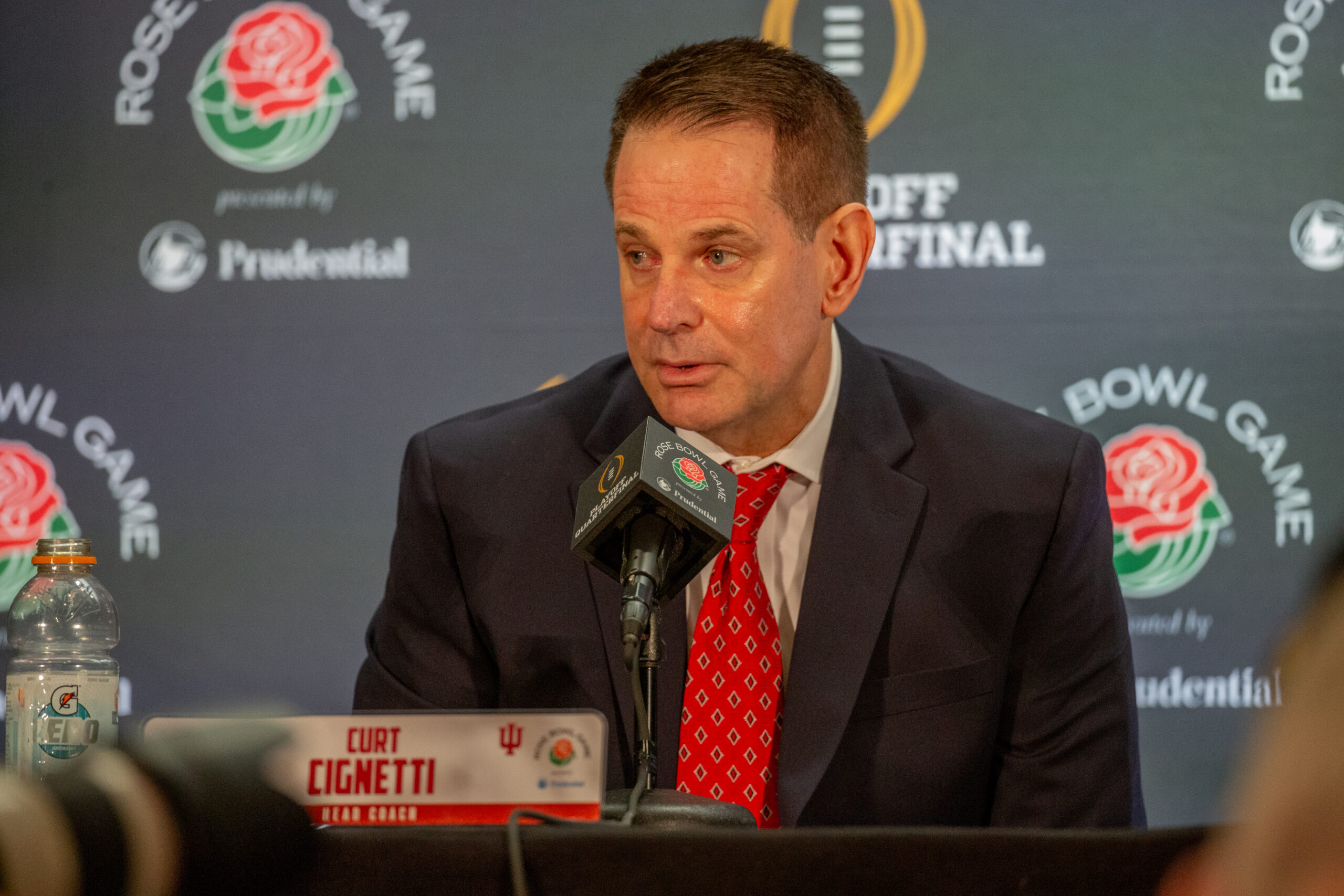
“I’m proud of our players and our coaches,” Indiana head coach Curt Cignetti said. “This group earned this.”
What was once framed as a meeting steeped in tradition became something far more decisive. Indiana did not simply arrive at the Rose Bowl. They owned it.
Next stop: Atlanta.